Our Teacher Leaders

Teacher Leaders are the backbone of Teach For Armenia.

The program recruits graduates and professionals from every academic and career background, people ready to learn, take responsibility, and build stronger educational opportunities for children across Armenia.

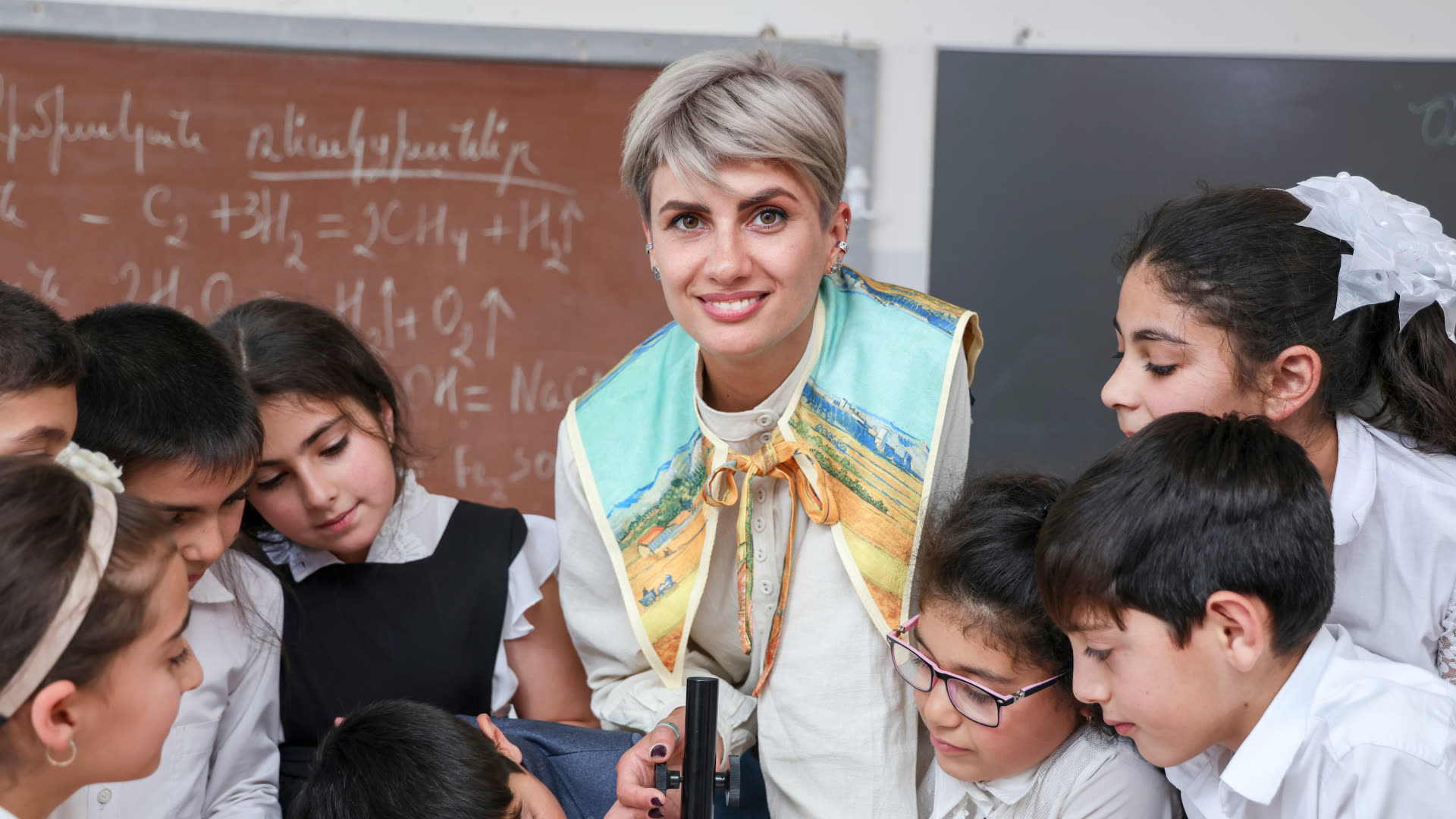
Teacher Leaders work alongside students, families, and school colleagues to create classrooms where children are challenged, supported, and seen. They do this with structured preparation, individual coaching, peer learning, and a nationwide community behind them.

Two years in the classroom serves as the foundation for a life-long career in driving system change.

They do more than teach. They lead, and they keep leading long after the two years end.

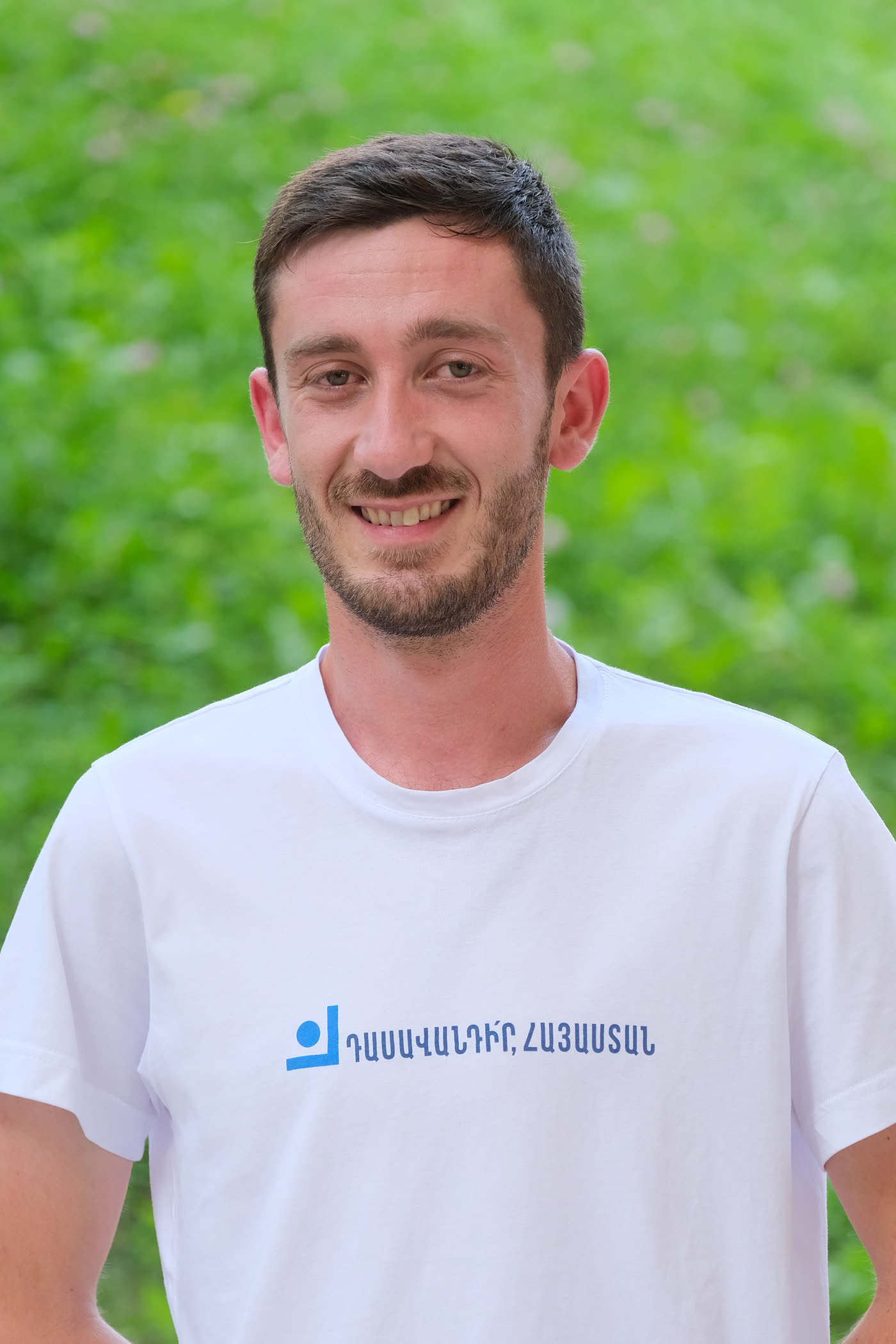
Mane Mkrtchyan, Mathematics

Dovegh secondary school, (Dovegh, Tavush) | G11

Before the classroom.

Prior to joining the program, Mane worked with the NGO sector, actively engaging in various volunteer projects focused on environmental issues and civil society development. She was also an active Wikipedia editor

The challenge.

One of the key challenges at school was finding instructional methods that were accessible and clear to all students in the classroom, as well as keeping them motivated to learn.

Taking Action.

Driven by a solution-oriented mindset in any situation, Mane continuously experimented with diverse teaching methods and patiently strived to understand each student's unique learning style. By incorporating social-emotional learning approaches, she made her lessons increasingly targeted and purposeful over time.

What changed.

Today, Mane has students who eagerly look forward to their math classes, motivated to take on new projects and bring fresh ideas to life. In her classrooms, leadership skills and academic growth develop hand in hand.

“I enjoy the unhurried pace of rural life. Here, I actually find the time to truly live.” Mane Mkrtchyan, Teach For Armenia, Dovegh Secondary School, Mathematics teacher
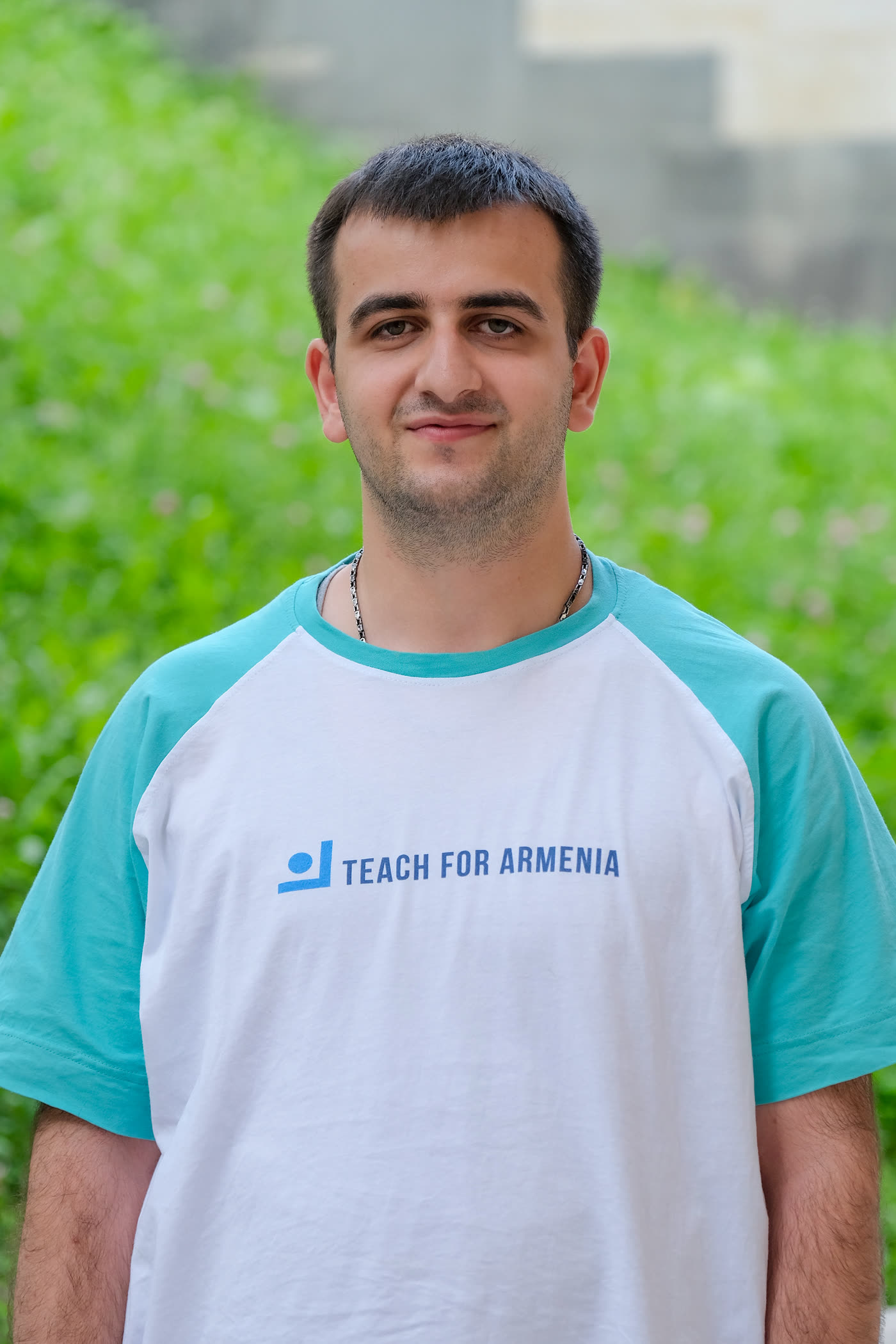
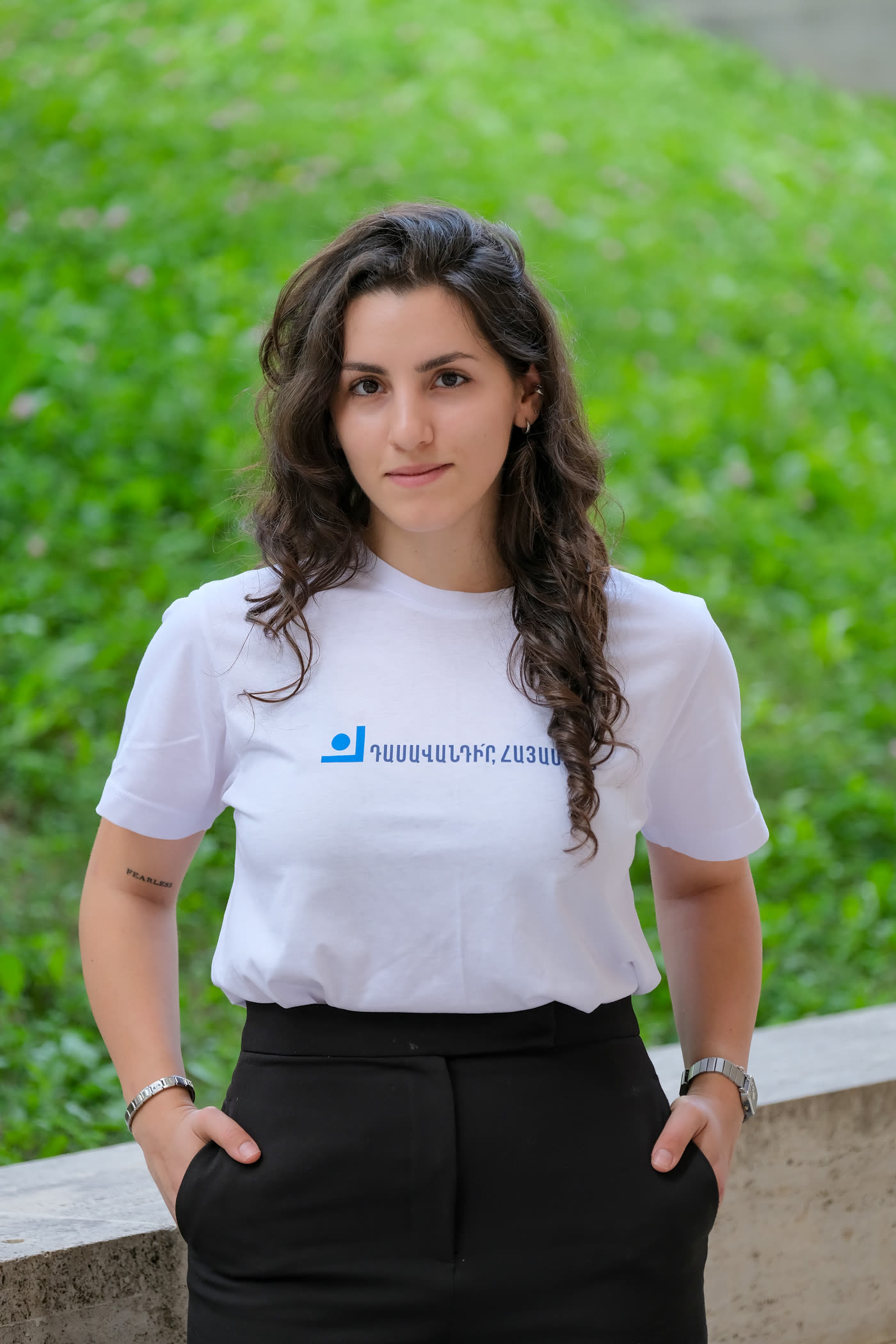
Mariam Sargsyan, Armenian Language

Koti Secondary School, (Koti, Tavush) | G11

Before the classroom.

Prior to joining the program, she worked in her primary profession as a journalist. She also hosts her own podcast.

The challenge.

Teach for Armenia's National Leadership Program was Mariam's first opportunity to work directly with students. In the beginning, she faced the challenge of finding targeted approaches for every lesson and every student, struggling to spark an interest in her subject among some of them.

Taking Action.

Through her patience and dedication, Mariam was able to find a way to connect with every student. She incorporates moments into her lessons where students discover more about themselves and their peers, fostering a warm classroom environment where they genuinely want to help each other.

What changed.

Today, Mariam leads classrooms where Armenian language lessons are joyful, full of interest, and highly engaging. Her students also enthusiastically participate in extracurricular activities and join various projects. Today, Mariam feels significantly more confident in her role as a teacher.

“The program gave me the opportunity to rediscover all the beauties of rural life and find my own inner peace.” Mariam Sargsyan, Teach For Armenia, Koti Secondary School, Armenian Language and Literature teacher

Aleksan Kharatyan,Biology

Nor Amanos secondary school, Nor Amanos, Aragatsotn province | Cohort G11

Before the classroom.

Before stepping into the classroom as a Teacher Leader, Aleksan studied Biology at Vanadzor State University, building a deep academic foundation in the natural sciences. Alongside his university studies, he gained valuable years of professional experience in the medical and pharmaceutical fields. This background didn’t just sharpen his precision and sense of responsibility; it cemented a core belief: science only truly matters when learners can pull it out of the laboratory and connect it to real life.

The challenge.

When Aleksan arrived at Nor Amanos, he encountered students navigating a maze of varying motivation, self-doubt, and fragmented knowledge. For many, Biology was trapped on the page: a rigid list of facts to be memorized rather than a vibrant lens for understanding themselves and the living world. Confined to theoretical learning with few opportunities for practical discovery, students struggled to see themselves as capable scientists or active agents of change.

Taking Action.

Aleksan completely reimagined the learning experience, transforming the classroom into a dynamic laboratory of inquiry. He replaced rote memorization with hands-on observation, interactive models, experiments, and lively, student-led debates. Instead of handing out ready-made answers, he challenged his students to ask bold questions, form hypotheses, and decode biological processes in their own voices.

Breaking the walls of the traditional classroom, Aleksan turned the surrounding environment into a living textbook. He empowered students to bridge the gap between scientific theory and their everyday lives, guiding them to take ownership of community initiatives. With intentional care, he uplifted the quietest, least confident students, giving them meaningful leadership roles that shifted them from passive observers to active creators.

What changed.

The transformation was palpable. The classroom evolved from a quiet room of information-receivers into a buzzing hub of young investigators creating, questioning, and collaborating. Students who once hesitated to speak up began leading experiments and voicing their ideas with newfound confidence.

Biology was no longer just a hurdle for graduation; it became a practical toolkit for life. A powerful culture of initiative took root across the school. Students realized that their education wasn't merely preparation for an exam, but a vital foundation for understanding, shaping, and uplifting the community around them.

“My ultimate goal isn't just for students to remember Biology; it is for them to grow curious enough to question the world, confident enough to investigate it, and responsible enough to improve it.”

Aleksan Kharatyan | Teach For Armenia, Nor Amanos Secondary School, Biology Teacher

Artak Safaryan, Computer Science

Sevkar secondary school, Sevkar, Tavush | Cohort 11

Before the classroom.

Prior to becoming a Teacher Leader through Teach For Armenia's two-year National Leadership Program, Safaryan was a developer with itOk.

The challenge.

One of the first challenges the Teacher Leader encountered was the attitude of many male students toward learning. Many of the boys did not see how doing well in school or investing in their education could benefit their future, and they struggled to connect learning with their own aspirations.

Taking Action.

He used his own experience as an example, showing students how education can transform a person’s life, environment, and way of thinking. As a young male teacher who is also a programmer, he became a relatable role model for the boys. Through his example and everyday interactions with students, he demonstrated that learning and continuous growth can open new opportunities and shape the kind of future they can build for themselves.

What changed.

Having a young male teacher with a background in programming helped many boys see education differently. They began to view learning not simply as a school requirement, but as something that could expand their opportunities, develop their skills, and influence their future. His presence also helped challenge the perception that academic achievement and personal growth were disconnected from the lives and aspirations of young men.

“I wanted my students to see through my example that education can change not only what you know, but also the life you are able to build.”

“One of my main goals in teaching is to cultivate alternative thinking and develop students’ ability to independently explore, search, and discover solutions. Coming from a different professional field myself, I bring a fresh perspective to education and encourage learners to think beyond conventional approaches. Technology education provides theoretical knowledge about the tools of the future: or at least their early prototypes. Extracurricular activities, when they are engaging rather than tiring or routine, help students move beyond theory by strengthening practical application, creativity, and hands-on experience with those tools.”

Artak Safaryan | Teach For Armenia UA, Sevkar School, Informatics Teacher, IT Specialist (Partner Company: ItOk)